
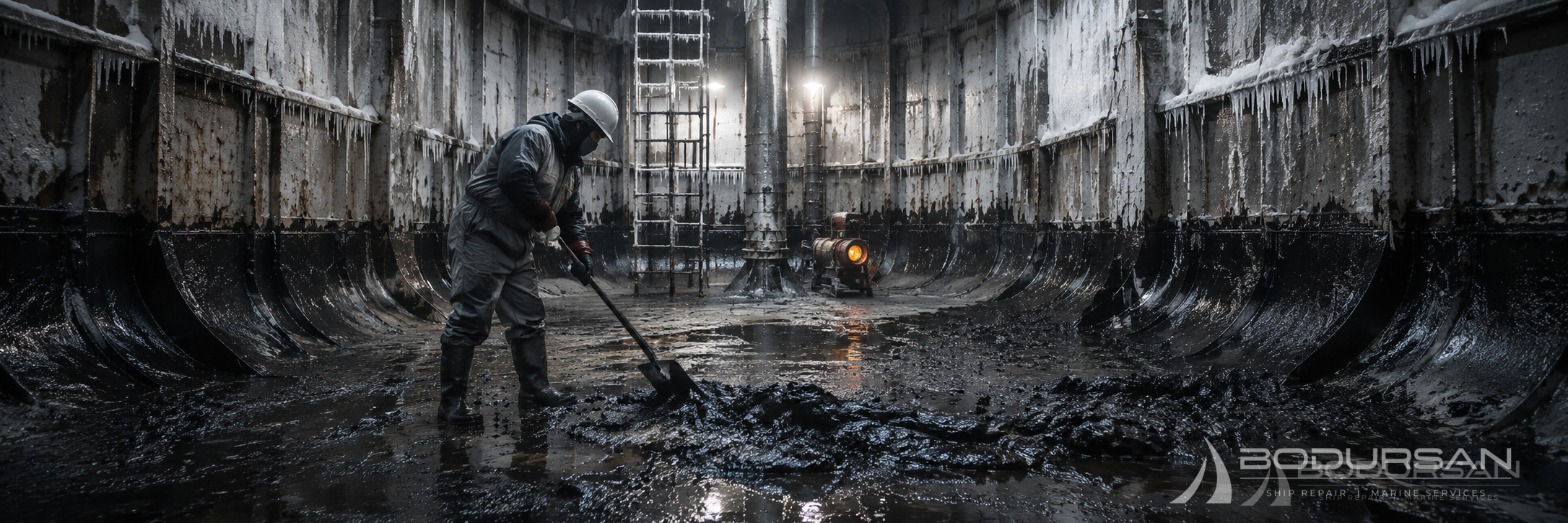
Cold turns soft sludge into board
When steel temperatures drop, residues that flowed during the voyage behave like stiff mats. Scraping without a heat or staging strategy shreds effort into dust and shoulder injuries while leaving sheets bonded to plating.
Demucking in cold conditions is less about “more people” and more about changing the material state in controlled patches.
Heat without coating roulette
Local warming — where the vessel system and coating allow — can restore just enough plasticity to lift mats in coherent pieces. Uncontrolled torch culture has no place here. Follow vessel procedures, coating limits and enclosed-space rules. If heat is forbidden, plan longer mechanical cycles and smaller patch sizes.
Staging that keeps suction alive
- Work downhill toward the suction point so softened material does not re-freeze in place
- Clear hose internals frequently; cold lines plug faster
- Bag and remove in batches sized to the reception tank ashore or on deck
Where HP/UHP fits
Jetting can help after bulk mats are gone, but blasting rock-hard demuck rarely replaces mechanical lift. Use HP/UHP washing to finish films once thickness is manageable — see also high pressure water jetting.
Owners operating in winter windows should flag expected steel temperatures in the enquiry. That single number changes crew size, shift length and waste fluidity assumptions. Start with demucking services and the demucking topic hub.