Location is a process variable
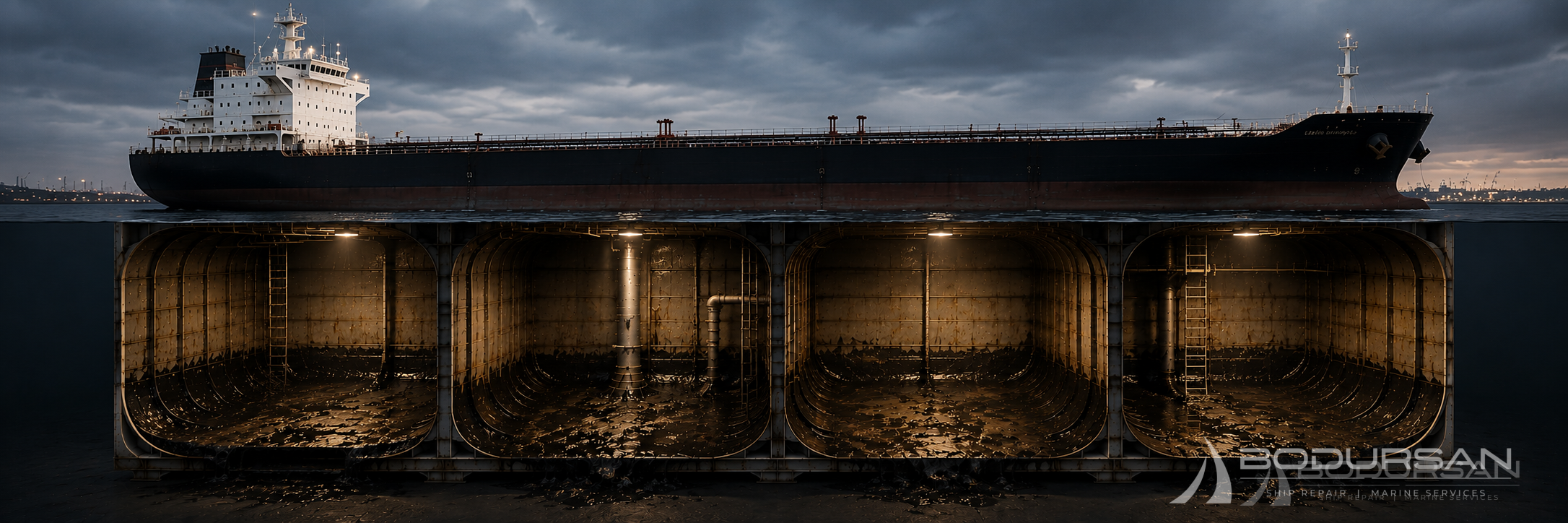
Demucking quality depends on tools and method — but the berth-or-anchor choice changes everything around the method: boat traffic, waste reception timing, crane access and how long a hatch can stay open under wind and swell.
Alongside strengths
- Steadier logistics for sludge reception and stores
- Easier relief of crews and equipment
- Often simpler coordination with surveyors who want to witness stages
Alongside work can still fail if shore windows are short or if hot-work elsewhere on the vessel competes for permits.
Anchorage strengths and penalties
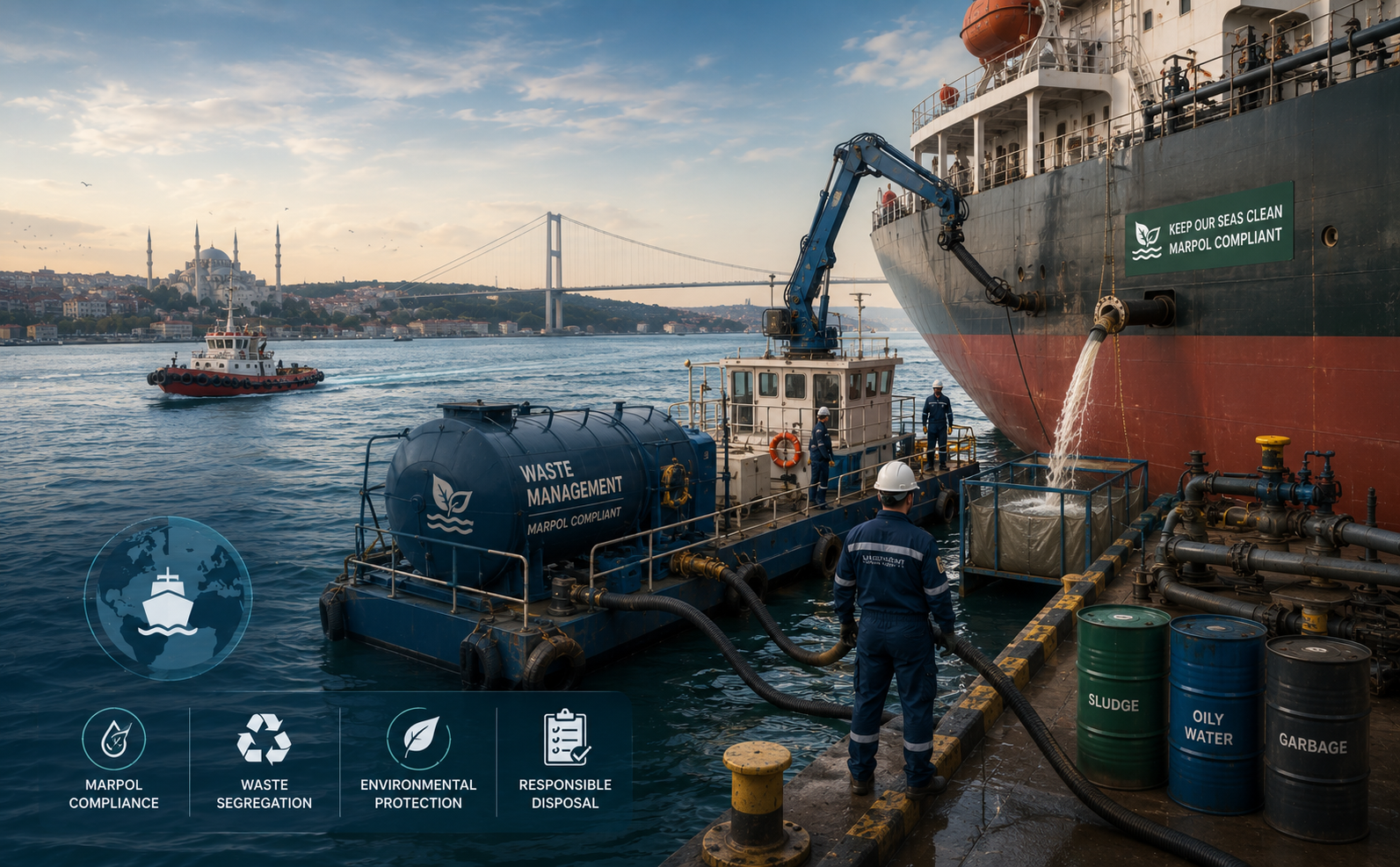
Anchorage can unlock a demucking slot when berths are scarce. The penalty is weather exposure, launch dependency and tighter waste staging. Swell that seems mild on deck becomes fatigue and spill risk inside a hopper.
Brief sea state limits in the job plan. If limits are hit, stop-work is cheaper than a contaminated deck or an injured worker.
Decision prompts for managers
- Is licensed waste reception available for the chosen location on the planned dates?
- Can atmosphere control equipment run continuously with the power/steam available?
- Will survey or charterer inspection occur in the same window?
- Is there a backup berth if anchorage aborts?
Map the technical steps via the demucking hub, then fix location with operations through contact. Logistics and waste disposal capacity should be confirmed before the first launch leaves the quay.