
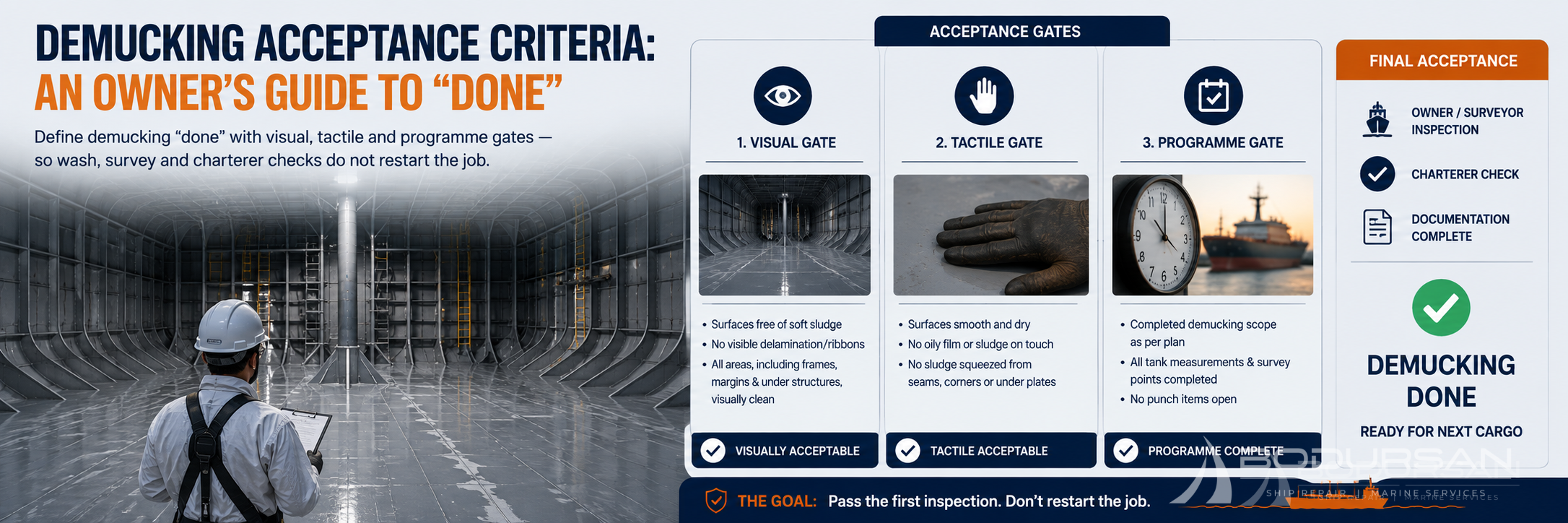
“Looks better” is not an acceptance criterion
Disputes after demucking usually start with vague language. If the purchase order says only “demuck tanks”, each party invents a finish line. Owners protect budget and schedule by writing gates that a superintendent can verify without laboratory equipment.
Useful gates for the demuck phase
- No free-standing sludge mounds on tank bottoms and hoppers
- No continuous ribbons along framing heels that a glove can peel in sheets
- Coil zones cleared enough that wash lances can see plating
- Manhole and stub pockets emptied before declaring the tank ready for wash
These gates do not replace wall-wash numbers. They decide whether washing is allowed to begin. Mixing the two stages creates false fails and repeat visits.
Handover notes that prevent rework
Record tanks completed, residual risk bays (if any), waste volumes transferred and weather or access constraints that limited reach. A one-page note beats a verbal “we finished”. Pair the note with photos of hoppers and coil areas when charterers are sensitive.
When purity targets follow, route the next stage through fine cleaning rather than stretching demucking language to cover wall-wash.
How Bodursan uses criteria in practice
We align gates during mobilisation briefings, then hold them at shift changes. If a tank cannot meet a gate because of coating collapse or unreachable geometry, we escalate before burning wash chemistry. Explore programme options on demucking services or start from the demucking hub.