Demucking is enclosed-space work first
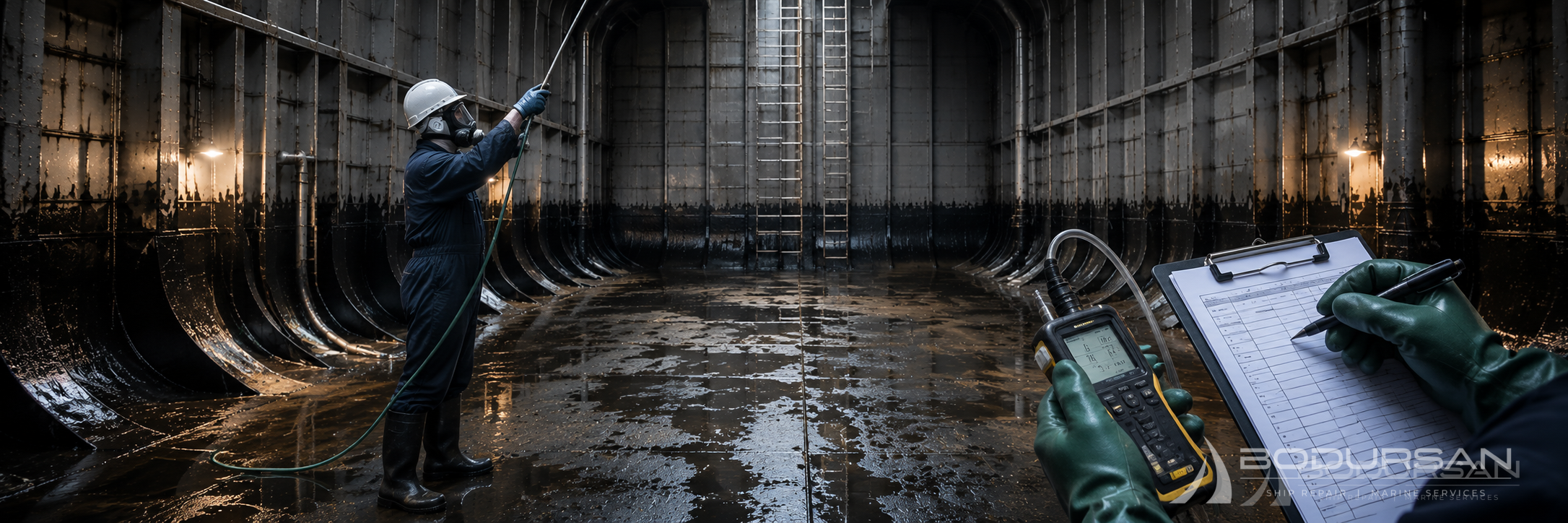
Mechanical residue removal puts people inside tanks that recently held hydrocarbons. The cleaning goal never outranks atmosphere discipline. A demucking plan that ignores permit rhythm is not a plan — it is a schedule waiting for an incident.
Before the first shovel or scraper enters
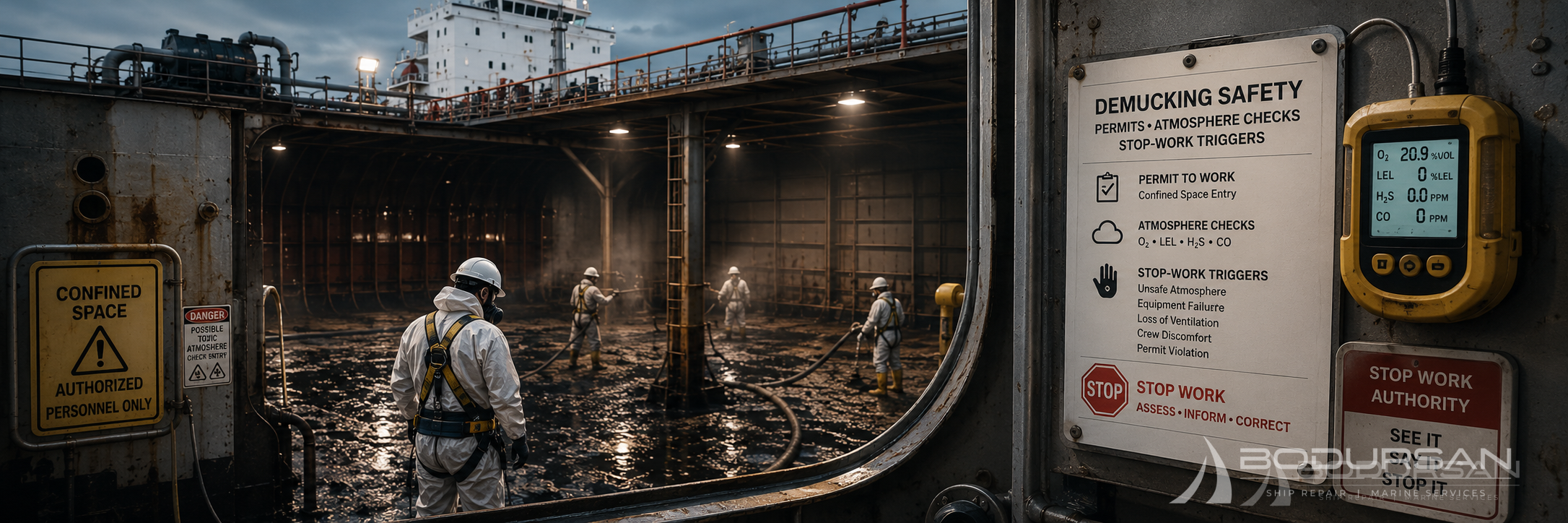
- Confirm isolation, opening and rescue arrangements match the permit
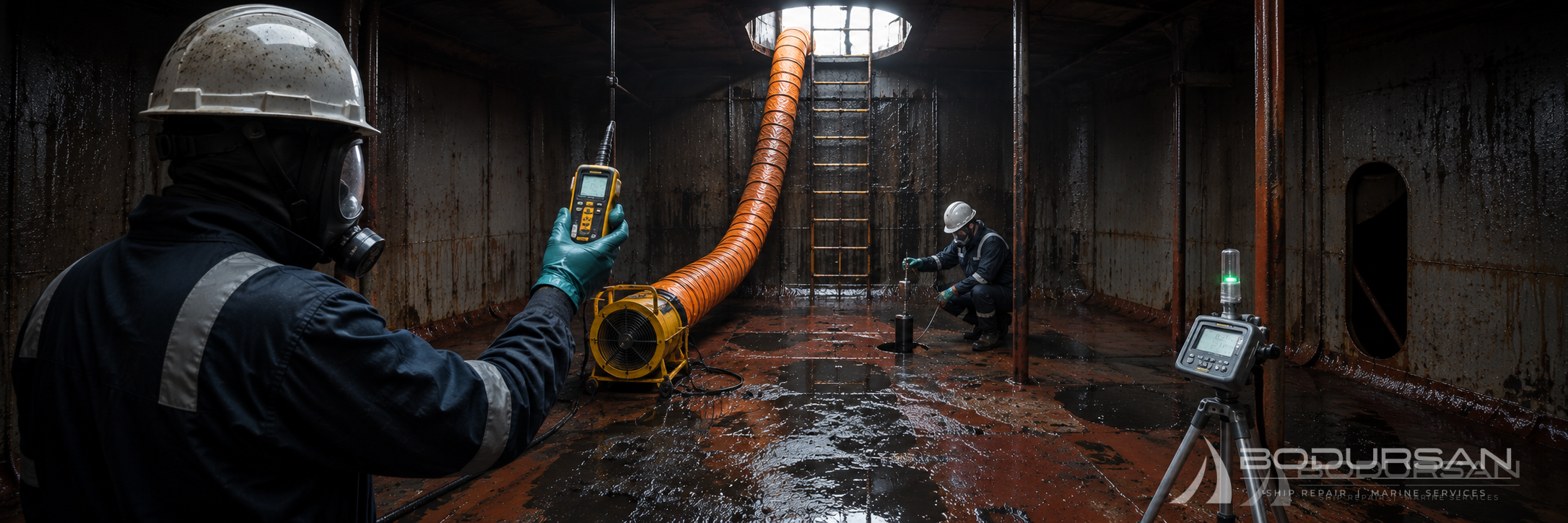
- Establish ventilation that actually moves air through the working bay, not only the manhole
- Test oxygen, flammables and toxics at multiple heights and locations
- Brief the stop-work list in plain language so every person can call it
Residues keep off-gassing. That is why demucking and gas freeing are neighbours in the programme, not distant cousins. See also atmosphere guidance in our demucking cluster.
Stop-work triggers that must be non-negotiable
- Instrument readings drift outside the agreed band
- Ventilation fails or ducts collapse / disconnect
- Lighting or communications drop below the briefed minimum
- A worker reports dizziness, irritation or unusual odour spikes
PPE and tool hygiene
Select gloves, suits and respiratory protection for the cargo family — not a generic “tank kit”. Contaminated tools reintroduced after a break can seed vapour again. Bag and segregate heavily fouled gear at the hatch.
Safety paperwork should name the tanks, the watch pattern and the rescue chain. If that page is blank, demucking is not ready to start. Contact operations via our desk when the vessel window is tight but permits still need alignment.